Short answer
No. There is no upper age limit for orthodontics, and healthdirect notes that orthodontists treat adults as well as children. Healthy teeth can be moved at any age, but adult teeth tend to move more slowly, gum health matters more, and some jaw problems need surgery as well. Suitability is decided after an individual assessment.
Key points
- There is no age limit for orthodontic treatment. What matters is the health of your teeth, gums and supporting bone.
- Adult teeth tend to move more slowly than a teenager’s, so treatment can take longer.
- Gum disease must be treated and under control before teeth are moved.
- Adults can choose between metal braces, tooth coloured ceramic braces, lingual braces on the inside of the teeth, and clear aligners, though not every option suits every bite.
- Treatment carries risks, including soreness, white marks on the teeth, root shortening and relapse without retainers, and results vary.
- You do not need a referral to see a specialist orthodontist.
Jump to a section 11
- Is there an age limit for orthodontic treatment?
- How orthodontic treatment for adults differs from treating teenagers
- Treatment options for adults: braces and clear aligners
- Choosing between braces and clear aligners as an adult
- What happens at an adult orthodontic assessment
- How long adult orthodontic treatment takes
- Risks of orthodontic treatment for adults
- Why retainers matter after adult orthodontic treatment
- What affects the cost of orthodontic treatment for adults
- Booking an adult orthodontic assessment in Woollahra or Mosman
- Common questions
Is there an age limit for orthodontic treatment?
There is no upper age limit. Healthdirect describes orthodontists as treating children, teenagers and adults whose teeth are crooked or whose jaws are not correctly aligned. Orthodontics Australia, the public site of the Australian Society of Orthodontists, calls the idea that only children benefit from braces a common myth.
Adults are also not unusual in an orthodontic waiting room. In the United States, the American Association of Orthodontists reports that 1 in 3 orthodontic patients today are adults. We see adults at every stage of life, from people in their twenties who never had treatment as teenagers to people whose teeth have moved since braces decades ago.
Adults look into treatment for different reasons. Orthodontics Australia mentions these, and we would add teeth that have moved since earlier treatment:
- Wanting to change how their teeth look, such as crowding or gaps
- Difficulty chewing
- Jaw pain that may be related to how the teeth and jaws fit together
- Sleep apnoea linked to the position of the jaw
- Teeth that have moved since braces years ago, often because a retainer was not worn
How orthodontic treatment for adults differs from treating teenagers
The way braces and aligners move teeth is the same at 45 as it is at 14. What changes is the biology around the teeth, and that shapes how we plan adult treatment.
Adult teeth tend to move more slowly
A review published in Frontiers in Physiology in 2024 concluded that adults tend to show slower tooth movement than adolescents, especially early in treatment, because the bone around adult teeth is denser and the ligament that holds each tooth remodels more slowly. The AAO makes the same point in plainer terms: adult teeth are more firmly set in the jaw, so your timeline may be longer.
Gum and bone health come first
Adults are more likely than teenagers to have some gum disease or bone loss, and teeth should only be moved in healthy gums. A clinical review in the Saudi Dental Journal states that the gums need a complete evaluation, especially in adults, and that orthodontic treatment with active gum disease is contraindicated. If your gums need attention, we may ask you to see a periodontist or your dentist before treatment starts.
Treatment is still possible for many people with a history of gum disease, but the evidence is thinner than you might expect. A 2016 systematic review found no controlled evidence that orthodontic treatment either improves or worsens teeth already affected by gum disease, and stressed that good oral hygiene must be kept up throughout.
Some jaw problems need surgery as well
Braces and aligners move teeth. When a bite problem comes mainly from the size or position of the jaws, moving the teeth alone may not correct it. For some adults the plan combines orthodontics with jaw surgery, and the AAO lists orthodontic surgery among the treatments used for adults. In those cases we would refer you to an oral and maxillofacial surgeon and plan the treatment together. Orthodontics Australia notes that surgery extends the overall timeline to allow for healing and further adjustments.
We will tell you honestly at the assessment whether we think your problem can be treated with orthodontics alone, and we will explain the alternatives, including leaving it as it is.
Wondering whether treatment is worth it at your age?
An assessment tells you what is possible, what is involved and what the alternatives are, including doing nothing. Call (02) 8412 0085 or send an enquiry to book in Woollahra or Mosman.
Treatment options for adults: braces and clear aligners
Adults usually care a great deal about how visible treatment will be. There are four main options, and each comes with trade-offs. The descriptions below draw on healthdirect’s guide to braces and retainers and Orthodontics Australia’s comparison of braces and clear aligners.
| Option | How it looks | What to know |
|---|---|---|
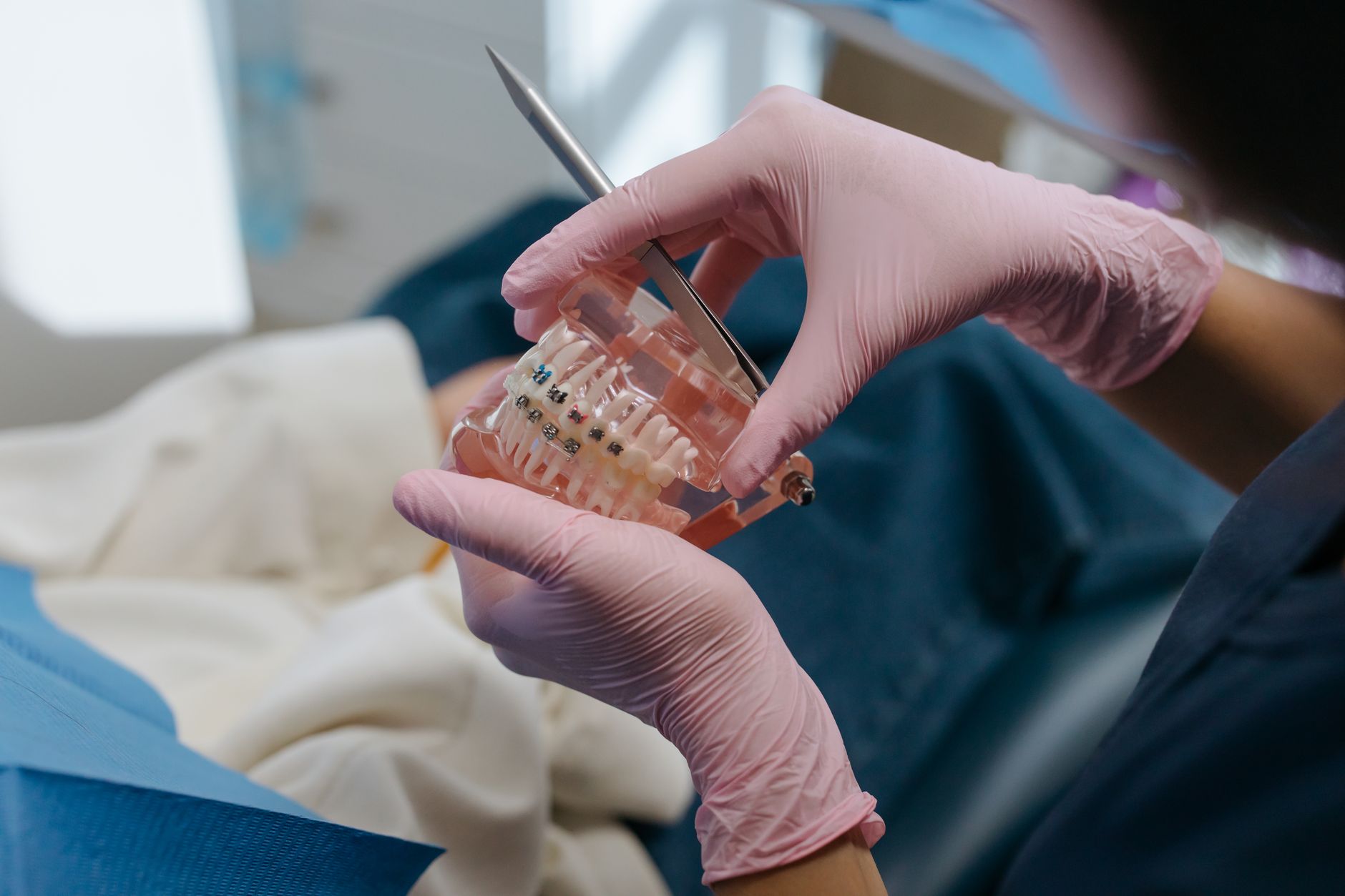
| Metal braces | Visible metal brackets and wire | Fixed in place, so they work without you having to remember them. Healthdirect describes them as the most cost-effective option. Cleaning takes more time. |
| Ceramic braces | Brackets close to the colour of your teeth | Work in the same way as metal braces but are less noticeable. |
| Lingual braces | Metal brackets fixed to the inside of the teeth | Hard to see, but healthdirect notes they are more expensive. |
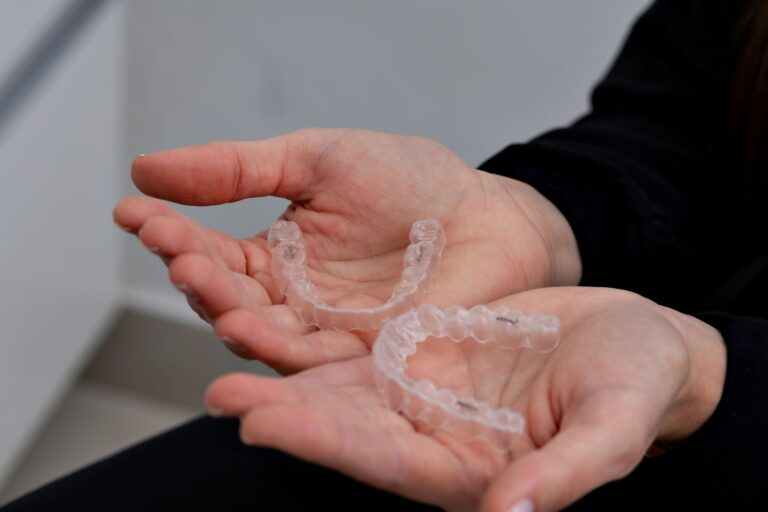
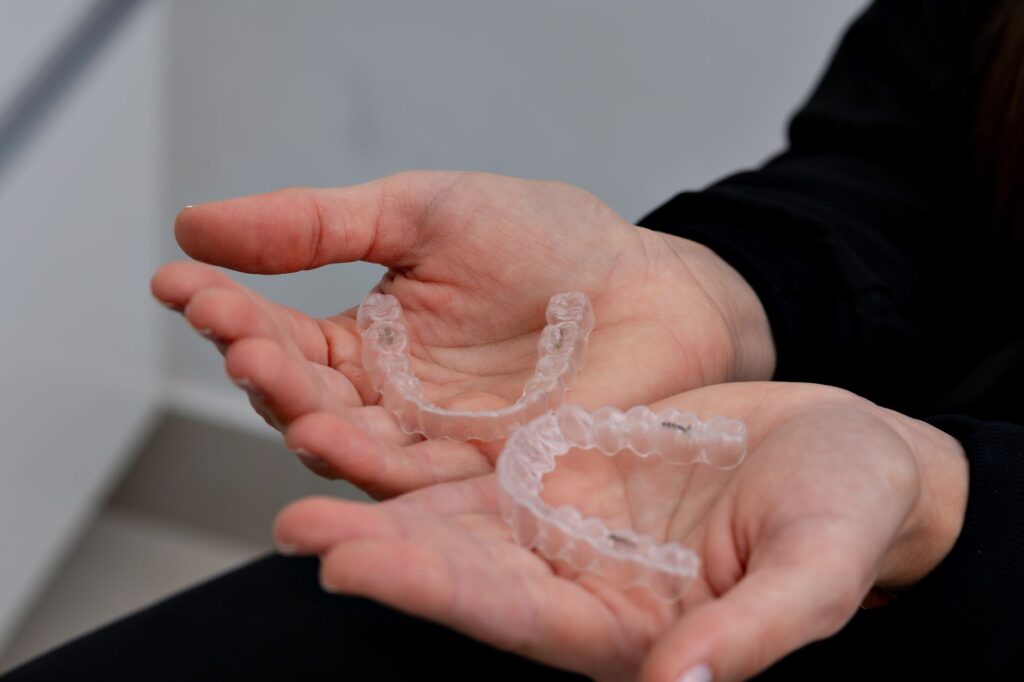
| Clear aligners | Thin, clear plastic trays, clear but not invisible | Removed to eat and drink, but Orthodontics Australia says they should be worn 20 to 22 hours a day. They only work if you wear them consistently. |
Aligners ordered online
The Australian Society of Orthodontists warns that direct-to-consumer aligners carry a risk of irreversible damage to the teeth and gums, and holds that there is no substitute for a face-to-face oral health assessment. Whatever you choose, have your teeth, gums and bite examined in person first.
Choosing between braces and clear aligners as an adult
Orthodontics Australia notes that braces may be the only option for some more severe cases, while complex problems can sometimes be treated with aligners too. The honest answer depends on the movement your teeth need and on how reliably you will wear removable trays. Our earlier article on Invisalign compared with braces goes through the choice in more detail.
A few practical questions help adults decide:
- Will you wear aligners for 20 to 22 hours a day? If work, travel or habits make that unlikely, fixed braces may suit you better.
- How much does visibility matter? Ceramic and lingual braces and clear aligners are all less noticeable than metal braces.
- Do you have crowns, bridges or missing teeth? Existing dental work can affect which appliance is practical, so bring a list to your assessment.
What happens at an adult orthodontic assessment
You do not need a referral. Healthdirect confirms you can see an orthodontist without one, and that a first consultation usually happens in two parts: records first, then a discussion of the options. You can read about how we approach orthodontic care for adults on our service page. For adults it usually runs like this:
- Your concerns first. We ask what bothers you about your teeth or bite, about any earlier treatment, and about your general and dental health.
- An examination. We look at the teeth, gums, bite and jaw joints, and check how healthy the gums and supporting bone are.
- Records. These may include photographs, a digital scan and X-rays.
- A plain explanation. We explain what we see, whether treatment is worthwhile, which options could work, how long each might take, the risks, and what happens if you choose not to have treatment.
How long adult orthodontic treatment takes
Healthdirect says orthodontic treatment to straighten teeth can take 18 months or more, with routine appointments every 4 to 12 weeks, and that braces and aligners usually take 1 to 3 years. Orthodontics Australia gives the same 1 to 3 year range and notes that some limited, cosmetic-focused treatments can take 6 to 12 months. Because adult teeth tend to move more slowly, adults should expect their own timeline to vary.
Orthodontics Australia lists what changes the length of treatment:
- How quickly your teeth move, which differs from person to person
- How far the teeth need to move
- Whether there is an underlying bite or jaw problem to correct as well
- Whether surgery or other dental treatment is part of the plan
Risks of orthodontic treatment for adults
Orthodontic treatment carries risks at any age, and adults should weigh them before deciding. The main ones are:
- Soreness. Healthdirect notes you may be uncomfortable for a couple of days after braces are fitted or adjusted. The Saudi Dental Journal review reports that discomfort tends to peak on the second day and usually lasts about a week.
- White marks and decay. Plaque left around brackets can decalcify the enamel, and the same review notes these lesions can develop within four weeks. A 2020 systematic review found some can still be seen up to five years after braces come off, so some marks may not fully fade. Careful cleaning around every bracket is the main protection.
- Root shortening. The risk of root resorption increases with the length of treatment, and the Frontiers in Physiology review notes that adults may experience more severe root resorption than adolescents as treatment time extends.
- Gum recession and gum problems. The same review reports more severe gum recession in adult orthodontic patients than in adolescents, and healthdirect lists gum infection among the risks of braces.
- Ulcers and rubbing. Braces can scratch the cheeks and lips, especially in the first weeks.
- Relapse. Teeth can move again if you do not wear your retainer as advised.
Results vary
How your teeth respond depends on your bone, your gums, the movement needed and how well you keep up with cleaning, aligner wear and retainers. Whether a treatment suits you can only be decided after an individual assessment, and you are always welcome to seek a second opinion.
Why retainers matter after adult orthodontic treatment
Retainers are part of the treatment, not an optional extra. Healthdirect describes wearing braces for 12 to 24 months followed by a retainer for another 12 to 24 months or longer, and lists teeth moving again as a risk if a retainer is not worn as advised.
There are two kinds. A fixed retainer is a thin wire bonded behind the front teeth, and Orthodontics Australia notes it removes the chance of forgetting to wear it, although a removable retainer is often still needed to hold the other teeth. A removable retainer is usually worn at night. We talk through which suits you, and how long to wear it, before treatment begins.
What affects the cost of orthodontic treatment for adults
We cannot give a meaningful figure without seeing your teeth, because the cost depends on what you need. Orthodontics Australia’s guide to costs lists what changes it:
- The complexity and length of treatment
- The type of appliance: metal, ceramic or lingual braces, or clear aligners
- Any additional appliances the plan needs
- What the fee includes, such as records, retainers and reviews after treatment
- Your level of private health insurance extras cover
Booking an adult orthodontic assessment in Woollahra or Mosman
Orthodontic treatment is not covered by Medicare, so check with your health fund about what your extras policy includes. We explain the full cost before any treatment starts, and our payment plans page sets out how fees can be spread over time.
Prof. Ali Darendeliler and Dr Roshanak Boustan are specialist orthodontists. Healthdirect notes that an orthodontist completes an extra three years of specialist training after a dental degree. As a practice offering specialist orthodontics in Sydney, we treat adults at 135 Edgecliff Road, Woollahra, and Suite 2, 600 Military Road, Mosman. Both clinics can be reached on (02) 8412 0085.
Common questions
Am I too old for braces?
No. There is no upper age limit for orthodontic treatment. What matters is the health of your teeth, gums and supporting bone, which we check at an assessment.
Does orthodontic treatment take longer for adults?
It can. A review published in 2024 found adult teeth tend to move more slowly than a teenager’s. Healthdirect puts typical treatment at 1 to 3 years, and your own timeline depends on how far your teeth need to move and whether a jaw problem is involved.
Can I have orthodontic treatment if I have had gum disease?
Often, yes, but the gum disease must be treated and under control first, and your gums need careful maintenance throughout. We may ask you to see your dentist or a periodontist before treatment starts.
Are clear aligners suitable for every adult?
No. Aligners can treat many problems, but Orthodontics Australia notes that braces may be the only option for some more severe cases, and aligners only work if they are worn 20 to 22 hours a day.
Do I need a referral to see an orthodontist?
No. Healthdirect confirms you can see an orthodontist without a referral from your dentist, although regular dental check-ups should continue during treatment.
Will I need to wear a retainer after treatment?
Yes. Retainers hold the teeth in their new position, and healthdirect lists teeth moving again as a risk if a retainer is not worn as advised. We explain the type and how long to wear it before treatment starts.
Is adult orthodontic treatment covered by Medicare?
No. Orthodontic treatment is not covered by Medicare. Some private health insurance extras policies include orthodontics, so check your level of cover with your fund.
The short version
Adults can have orthodontic treatment at any age. Teeth tend to move more slowly, gum health has to come first, and some jaw problems need surgery as well, so an individual assessment decides what is suitable.
- There is no upper age limit, and the AAO reports 1 in 3 orthodontic patients in the United States are adults.
- Healthy gums are a precondition. Gum disease is treated before teeth are moved.
- Options include metal, ceramic and lingual braces and clear aligners, each with trade-offs.
- Treatment usually takes 1 to 3 years and is followed by retainers.
- Risks include soreness, white marks, root shortening, gum recession and relapse, and results vary.
Book an adult orthodontic assessment
We will examine your teeth, gums and bite, explain your options in plain terms, including the risks and the alternatives, and tell you whether we think treatment is worthwhile. Clinics in Woollahra and Mosman.
Book a consultation Call (02) 8412 0085
Woollahra and Mosman · (02) 8412 0085
Sources
- Orthodontist, healthdirect Australia
- Dental braces and retainers, healthdirect Australia
- How much time does it take to straighten teeth?, Orthodontics Australia (Australian Society of Orthodontists)
- Traditional braces vs clear aligners, Orthodontics Australia (Australian Society of Orthodontists)
- Potential risks associated with direct-to-consumer clear aligners, Orthodontics Australia (Australian Society of Orthodontists)
- What are the benefits of a fixed retainer?, Orthodontics Australia (Australian Society of Orthodontists)
- How much do braces cost?, Orthodontics Australia (Australian Society of Orthodontists)
- Adult orthodontics, American Association of Orthodontists
- The age-related effects on orthodontic tooth movement and the surrounding periodontal environment, Wang et al., 2024, Frontiers in Physiology
- Adverse effects of orthodontic treatment: a clinical perspective, Talic, 2011, Saudi Dental Journal
- Orthodontic treatment in periodontitis-susceptible subjects: a systematic literature review, Zasciurinskiene et al., 2016, Clinical and Experimental Dental Research
- Is bleaching effective in managing post-orthodontic white-spot lesions? A systematic review, Gizani et al., 2020, Oral Health and Preventive Dentistry
This article is general information only and is not a substitute for advice about your own teeth from a registered practitioner. Orthodontic treatment carries risks, results vary from person to person, and whether a treatment suits you can only be decided after an individual assessment.