
Hybrid Orthodontic Treatment in Sydney
Hybrid orthodontic treatment combines two different appliance types, or two anchorage methods, in a single plan: braces with clear aligners, lingual with standard braces, or mini-screws with a palatal expander. At Lifestyle Orthodontics in Woollahra and Mosman, we use it for complex cases that neither system handles perfectly on its own.
What Is Hybrid Orthodontic Treatment?
Hybrid orthodontic treatment means planning a single course of treatment that uses more than one appliance system, in sequence or together, rather than committing to braces or aligners for the whole journey. In practice, that usually means fixed braces for the demanding movements, then clear aligners to refine and finish. Temporary anchorage devices and elastics are often part of the same plan. The reasoning is simple: each stage of your case gets the appliance that handles it best.
Can You Have Braces and Invisalign at the Same Time?
Yes. Braces and Invisalign treatment can be included in a single plan, either in sequence or simultaneously. Sequential is the most common: you wear braces for a defined phase, then move into aligners. Simultaneous use also happens, typically with sectional braces on a few teeth while aligners work on the rest of the arch. Both are planned deliberately from the outset, not improvised partway through.
Which Movements Suit Braces, and Which Suit Aligners
Get this split right and the rest of the plan follows.
Braces handle these best. Severe rotations, particularly of premolars and canines. Root torque, where the crown is in place but the root is not. Extrusion, where a tooth must be drawn down into the arch. Large bodily movements across the arch. Significant bite correction and closing extraction spaces.
Aligners handle these best. Minor to moderate alignment. Detailing and finishing at the end of treatment. Appearance during the visible phase. Comfort and easier cleaning, because they come out.
Split the case this way and neither system has to struggle through the part it handles badly.
Hybrid Hyrax: Mini-Screws Plus a Palatal Expander
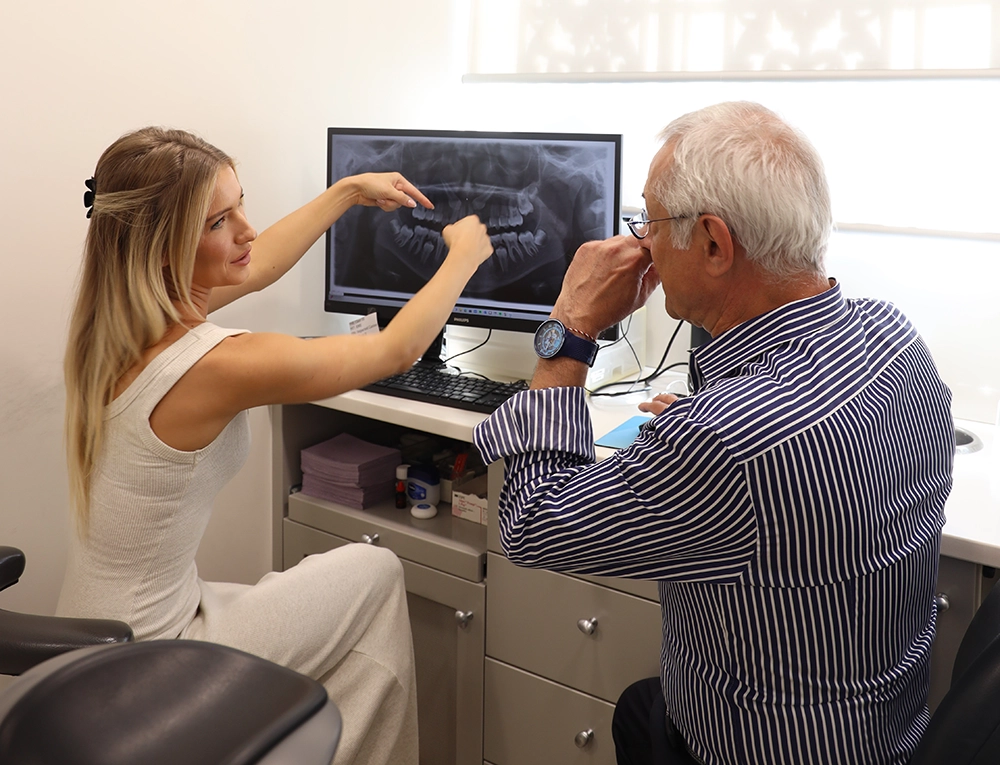
A Hybrid Hyrax is a different kind of hybrid. It combines two forms of anchorage rather than two appliance types. A conventional palatal expander pushes against the back teeth to widen a narrow upper jaw. A Hybrid Hyrax adds temporary anchorage devices, small titanium mini-screws placed in the bone of the palate, so part of the force is carried by bone instead of teeth.
Why the mini-screws matter
Anchoring to bone means more of the expansion goes into widening the jaw itself and less into simply tipping the back teeth outward. In a growing child or teenager, that produces a more skeletal result.
Who it suits
It is generally used in older children and teenagers with a narrow upper jaw, a crossbite or significant crowding, where a standard expander alone would tip the teeth rather than widen the bone. X-rays and a 3D scan determine whether it is appropriate.
What to expect
The mini-screws are placed under local anaesthetic and removed once the expansion phase is complete. Pressure across the palate and a temporary gap between the upper front teeth are both normal as the jaw widens, and the gap closes as treatment continues.
Mixing Brace Types: Lingual, Ceramic and Standard
Not every hybrid plan involves aligners. A common combination is lingual braces on the upper teeth, hidden behind the teeth where appearance matters most, paired with standard or ceramic braces on the lower teeth, which show far less when you speak and smile. That keeps the visible impact low without the cost of a full lingual case.
Another version runs braces for the main corrections and finishes with a short series of clear aligners to detail the result. Because finishing needs only small movements, that final stage is usually brief.
The right combination comes down to how much your teeth show when you talk, what your bite needs, and what you want to spend.
How Hybrid Treatment Works, Stage by Stage
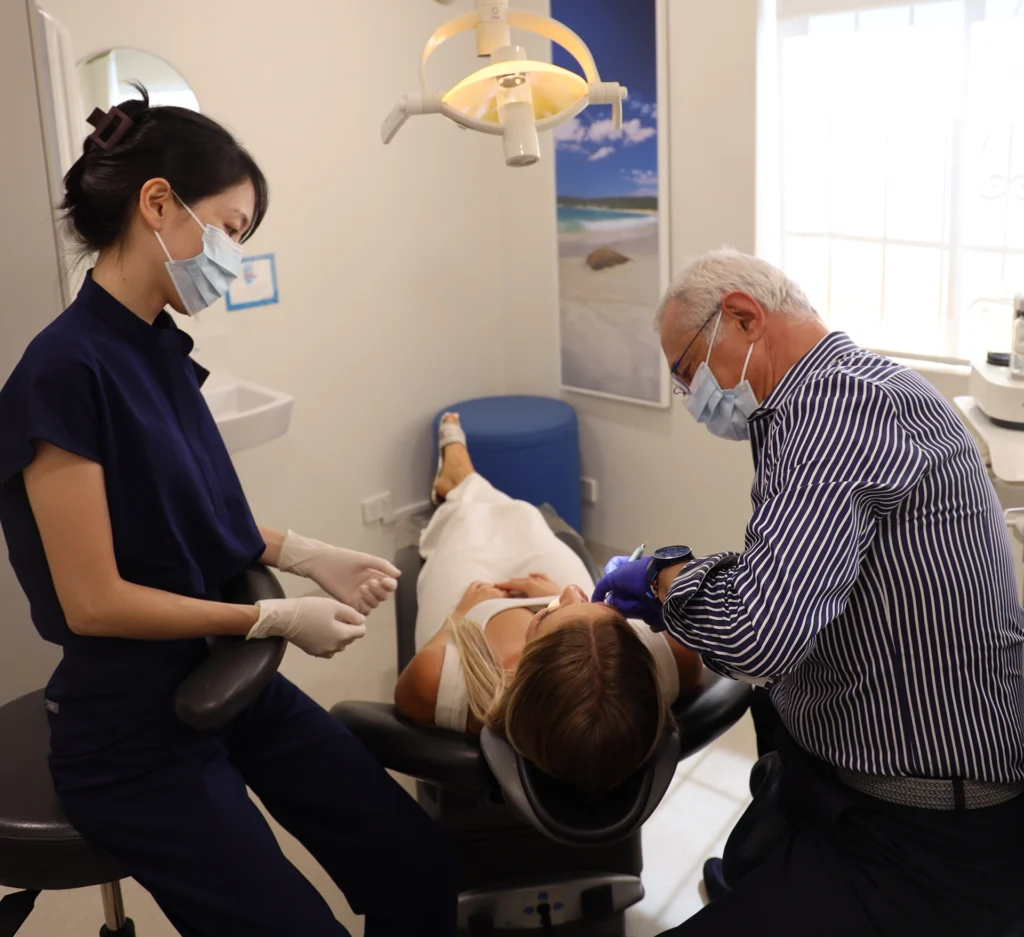
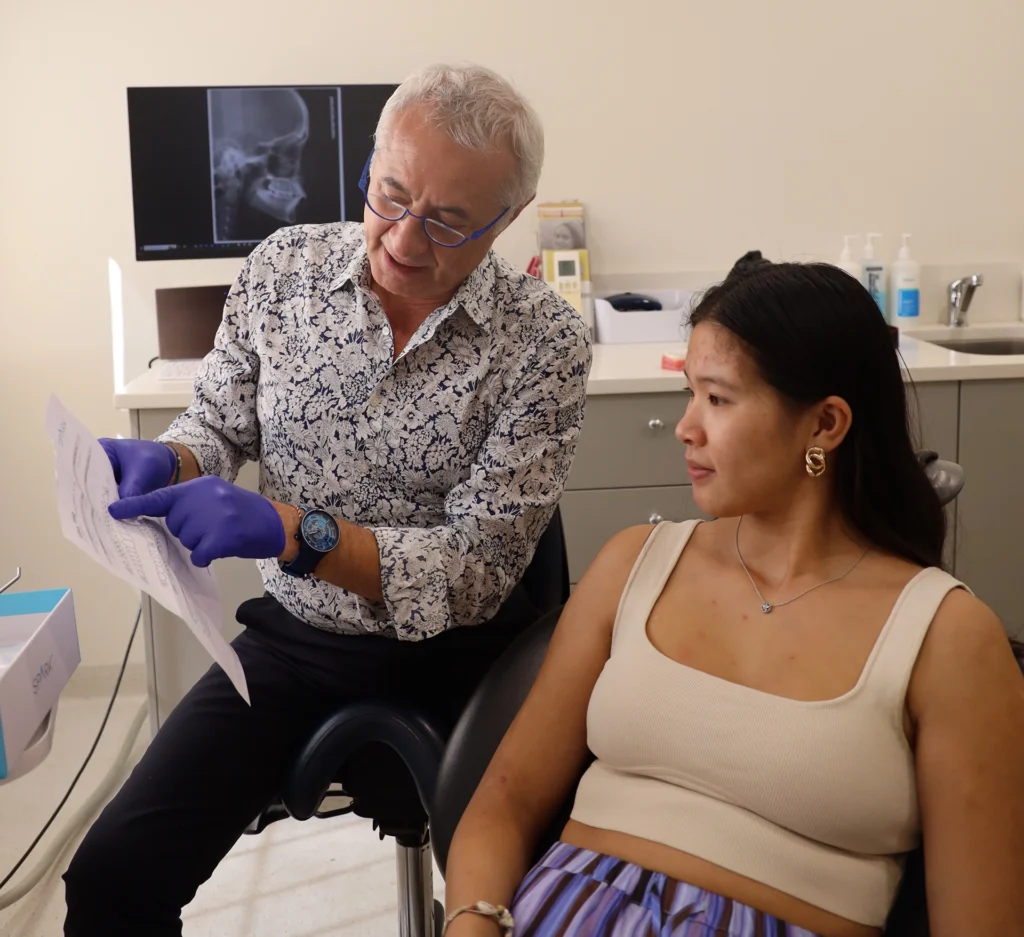
Consultation and digital scan. We examine your teeth and bite, take X-rays and a 3D scan, and map which movements need which appliance.
Phase one: fixed appliances. Braces do the heavy work first: rotations, root position, bite correction. This phase is kept as short as the case allows.
The handover scan. Once the difficult movements are complete, we take a fresh digital scan. Your aligners are made from your teeth as they are now, not from a prediction made months earlier. That is what keeps the second phase accurate.
Phase two: clear aligners. Aligners refine alignment and deliver a discreet finish.
Retention. Retainers hold everything in place. Without them, teeth drift back.
Where TADs, Elastics and Auxiliaries Fit In
There is more to a hybrid plan than braces and aligners. Temporary anchorage devices, tiny titanium screws set into the bone, give us something solid to pull against, so the teeth we want to shift actually shift and the ones we don’t stay exactly where they are. That opens up movements neither braces nor aligners could manage on their own. Elastics, sectional wires and attachments do the same job on a smaller scale. It is worth knowing that Professor Darendeliler’s own research covers temporary anchorage devices, sequential aligners and self-ligating brackets, which is precisely the toolkit a hybrid plan runs on.
Benefits of a Hybrid Approach
You get the precision of braces where the case genuinely needs it, and the comfort and discretion of aligners for everything else. Time in visible braces is usually shorter than a full fixed-appliance course, and the finish tends to be cleaner because the detailing is done with aligners built from an up-to-date scan. Setting the phases out from the start also means you always know where you are and what comes next.
Who Hybrid Treatment Suits, and Who It Does Not
Hybrid treatment earns its place in complex cases: significant crowding, marked rotations, deep or open bites, extraction cases, and adults who would rather keep the visible phase as short as possible. Our adult orthodontic treatment and complex orthodontic treatments frequently follow this pattern.
It is not for everyone, and we would rather say so early. Straightforward alignment does not need two systems, and adding one just piles on cost and complexity for no real gain. If your case needs fixed appliances throughout, braces alone will serve you better. When a case is simple, we will tell you it is simple.
How Much Does Hybrid Orthodontic Treatment Cost in Sydney?
What drives the cost is the complexity of your case, how long each phase runs, the appliances involved and the retainers afterwards. Using two systems does not by itself make it dearer than a long single-appliance course. Medicare does not cover routine orthodontics, though many private health funds with orthodontic extras will contribute, and payment plans are available. You will have a written quote in hand before anything begins.
Why Choose Lifestyle Orthodontics
Lifestyle Orthodontics is a boutique, specialist-led practice with clinics in Woollahra and Mosman. Professor Ali Darendeliler, a Professor of Orthodontics, leads the team alongside Dr Roshanak Boustan (MOrth RCSEd), who has treated complex malocclusions in cleft and craniofacial cases at Westmead Children’s Hospital. Hybrid treatment lives or dies on the planning, which is where a specialist-led practice with digital workflows and remote monitoring earns its keep. Meet our team. It’s all in the details.
FAQS
Frequently Asked Questions
Can I get braces and Invisalign at the same time?
Yes. They can be used in sequence, most commonly braces first and aligners to finish, or simultaneously with sectional braces on some teeth while aligners work on the rest. Which applies depends on the movements your case needs.
What is a hybrid orthodontic treatment system?
It is a treatment plan combining more than one appliance system, typically fixed braces, clear aligners and often temporary anchorage devices, using each for the movements it performs best rather than relying on one system throughout.
Is hybrid treatment faster than braces alone?
Not always, but it is often more efficient and usually shortens the time spent with visible braces. Total treatment time depends on how far your teeth must move and how consistently the aligners are worn.
Does hybrid orthodontic treatment cost more?
Not necessarily. Cost reflects complexity, duration and appliances rather than the number of systems used. We provide you with a written quote covering the entire plan at your consultation.
Are braces covered by Medicare Australia?
Routine orthodontic treatment is not covered by Medicare. Limited assistance exists only through specific schemes for eligible patients. Private health insurance with orthodontic extras is the usual source of a rebate.
What is the last stage of braces?
Detailing and finishing, where small refinements settle the bite, followed by removal and retainers. In a hybrid plan, this final stage is often performed with clear aligners rather than with the braces themselves.
Does hybrid treatment hurt?
You may feel mild pressure when braces are adjusted, or a new aligner is fitted, which usually settles within a day or two. Most patients manage it easily, and the aligner phase is generally the more comfortable of the two.
How do I know if hybrid treatment is right for me?
A consultation, X-rays, and a digital scan tell us which movements your case needs and whether splitting them between systems helps. If a single appliance will do the job as well, we will recommend that instead.
What is a Hybrid Hyrax expander?
A palatal expander that combines support from the back teeth with temporary mini-screws placed in the bone of the palate. Anchoring to bone directs more of the force into widening the upper jaw rather than tipping the back teeth outward.
How much does a Hyrax expander cost?
Cost depends on whether the expander is a standalone phase or part of a longer plan, and on how long the subsequent treatment lasts. We give you a written quote at your consultation, and many health funds with orthodontic extras contribute.
Why don’t dentists recommend Invisalign?
Most do offer it. Where hesitation exists, it is usually because the case involves movements aligners handle poorly, such as large rotations, root torque or extrusion. That is exactly the situation a hybrid plan solves, by using braces for those movements and aligners for the rest.