
Creating Beautiful Smiles for Life
TREATMENT

Sleep Apnea Treatment in Sydney

Restorative sleep begins with an accurate diagnosis. Our Sydney orthodontists fit custom oral appliances for obstructive sleep apnoea and snoring — a discreet alternative for people who cannot settle with CPAP.

Understanding OSA

Obstructive sleep apnoea occurs when the airway is partly or completely blocked during sleep — breathing is reduced, or stops altogether, in a recurring pattern through the night.

What is happening

The muscles controlling the tongue and throat relax as you fall asleep. The airway narrows. Oxygen levels fall, and the body wakes just enough to restart breathing. These episodes repeat, often hundreds of times, without ever reaching conscious memory.

Why it goes unnoticed

A partner, family member or friend usually notices first. Snoring, restless movement, laboured or interrupted breathing. The daytime cost is poor concentration and chronic fatigue — and a heightened risk of micro-sleeps at the wheel.

The pathway

Where sleep apnoea treatment actually begins

Most people arrive having been told they snore. The path is more ordered than it looks. We work alongside your sleep physician, never in place of them.

  1. 01

    Referral

    Your GP or specialist arranges a sleep study. If you are not sure where to start, we can point the way.

  2. 02

    Sleep study

    An overnight study measures your sleep, breathing and oxygen levels. It is the only way to confirm obstructive sleep apnoea.

  3. 03

    Diagnosis

    A sleep physician reviews the results and makes the diagnosis. We screen — we do not diagnose.

  4. 04

    Appliance fitted

    Only then does an oral appliance follow, prescribed and fitted to your own measurements by your orthodontist.

  5. 05

    Ongoing review

    We review how you are sleeping. We check the appliance, and how your bite settles over years of wear.

Complimentary screening

Start by finding out whether sleep is the problem

We screen every patient, adult or child, before we consider orthodontic treatment. Our recommendations change in the presence of a sleeping issue. The offer extends to your whole family, at no cost.

SnoreLab app recording a night of sleep
Recognising it

What sleep apnoea looks like

It presents differently in adults and children. Any one or more may be present. Most are noticed by someone else first — long before the person sleeping notices anything at all.
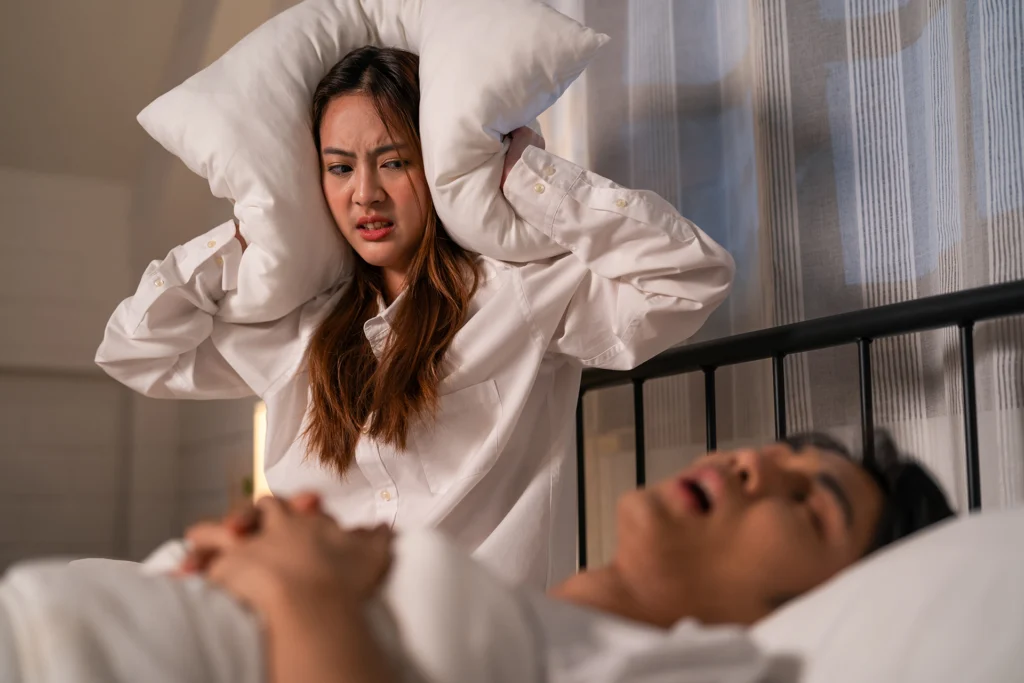
A partner kept awake by snoring

The signs adults explain away

  • Snoring, or witnessed pauses in breathing
  • Waking frequently through the night
  • Tiredness after a full night’s sleep
  • Morning headaches, dry mouth or sore throat
  • Poor concentration and daytime sleepiness
  • Irritability or low mood

Left unmanaged, disrupted sleep bears on concentration, mood and cardiovascular health. It also raises the risk of falling asleep at the wheel.

A child kept awake by a sibling snoring

The signs parents tend to miss

  • Snoring, or noisy effortful breathing
  • Mouth breathing, awake or asleep
  • Restless sleep and unusual sleeping positions
  • Bedwetting beyond the usual age
  • Morning irritability, or trouble concentrating at school
  • Night terrors, or excessive perspiration at night

In children, sleep apnoea rarely announces itself as tiredness. These signs are easily read as behaviour, not breathing. Sleep quality also bears on growth and learning.

Children are assessed differently from adults. Enlarged tonsils and adenoids are a common cause. We work alongside your paediatrician or ENT. Our children’s orthodontic care and our specialist paediatric dentist are both part of that conversation.

The appliance

A quieter alternative to the CPAP machine

A mandibular advancement splint is a slim, custom-made device worn only during sleep. It holds the lower jaw gently forward, keeping the airway open so breathing continues uninterrupted. We fit SomnoDent® appliances, each made to your own measurements by the orthodontist.

The Australian Dental Association recognises an oral appliance as a first-line option for adults with snoring and mild to moderate obstructive sleep apnoea.

Appliances also suit people who have tried CPAP and could not live with it. Where sleep apnoea is severe, CPAP remains first-line — and we will tell you so plainly.
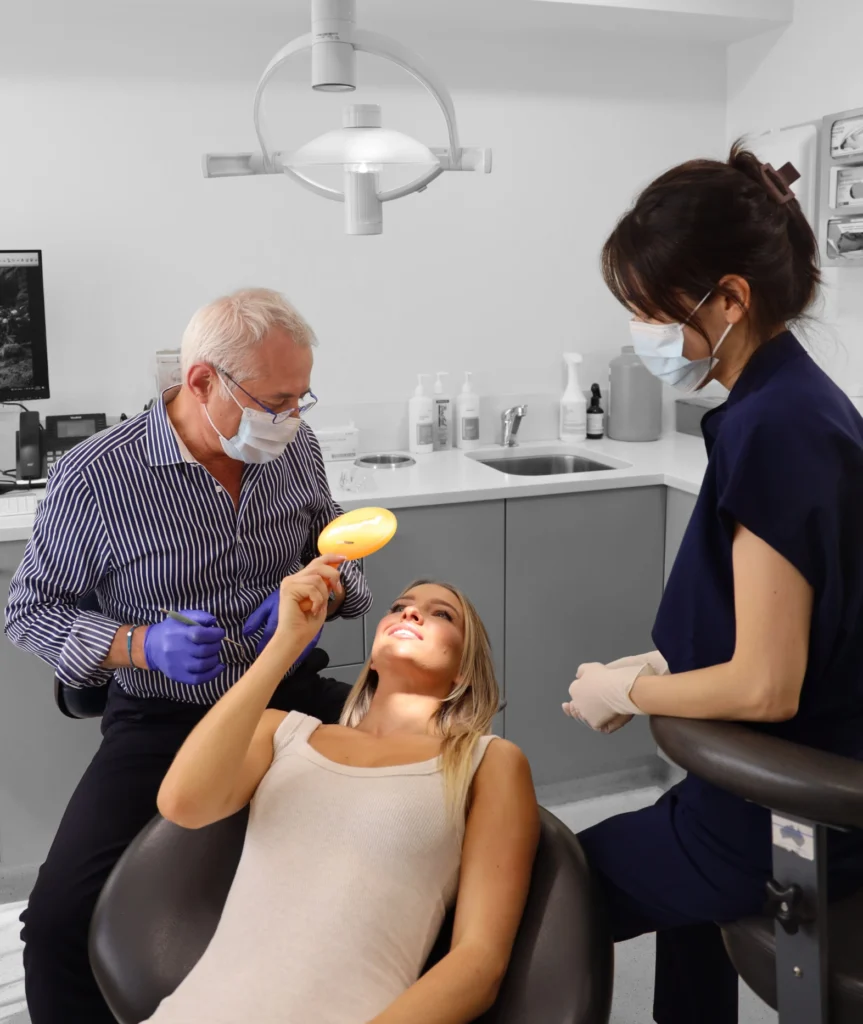
An orthodontist assessing a patient before fitting an oral appliance
Candid advice

Is an oral appliance right for you?

Not everyone is a candidate. Here is where we are straight with you.

It usually suits

  • Snoring without significant apnoea
  • Mild to moderate obstructive sleep apnoea
  • CPAP tried, and not tolerated
  • Frequent travel, or no power at the bedside
  • A jaw and bite suitable for advancement

It is not the answer when

  • Sleep apnoea is severe — CPAP remains first-line
  • No sleep physician has made a diagnosis yet
  • There are too few natural teeth to anchor it
  • Gum disease or jaw joint pain is untreated
  • The patient is a child — assessed separately
Oral appliance compared with CPAP
 Oral applianceCPAP
How it worksHolds the lower jaw forward to keep the airway openPumps pressurised air through a mask to hold the airway open
Best suited toSnoring, mild to moderate OSAModerate to severe OSA
NoiseSilentA quiet motor
Power neededNoneMains power
TravellingFits in a pocketMachine, hose and mask
Usual difficultyEarly jaw tenderness, extra salivaMask fit, dryness, tolerating the airflow
First-line for severe OSANoYes
The difference

Why an orthodontist belongs on your sleep team

Sleep apnoea is usually managed by physicians and surgeons. Rightly so. But an oral appliance is also a bite appliance. It changes where your jaw sits for hours, every night. That is orthodontic territory: jaw position, airway development, bite mechanics. It is the same discipline behind overbite treatment, and it decides how the teeth settle over years of wear.

Specialist orthodontist

Dr Roshanak (Roshy) Boustan

An Australian orthodontic board and AHPRA registered specialist orthodontist, with a special interest in sleep apnoea, growth modification and airway.

Specialist paediatric dentist

Dr Eduardo Alcaino

A specialist paediatric dentist and a past president of the International Association of Paediatric Dentistry, assessing airway and jaw development in children.

You can meet our orthodontists at either our Woollahra or Mosman practice.

FAQS

Common Questions

Can an orthodontist actually treat sleep apnoea?

Yes. An orthodontist treats obstructive sleep apnoea by prescribing and fitting a custom oral appliance, once a sleep physician has confirmed the diagnosis. Jaw position and bite are our specialty — exactly what the appliance changes.

Yes. A sleep study establishes whether obstructive sleep apnoea is present and how severe, which determines whether an appliance is appropriate. Your GP or a sleep physician can arrange one; we can point the way.

CPAP remains the most effective treatment for severe sleep apnoea. An appliance is smaller, quieter and needs no power. In mild to moderate cases, the one you actually wear is usually the one that works.

Cost depends on the appliance prescribed, the consultation and fitting, and the reviews that follow. Because every case differs, we provide a quote at your consultation rather than a headline figure that may not apply.

Rebates vary by fund and by your level of extras cover, so what you can claim differs from person to person. We will confirm what applies in your case at the consultation, before treatment begins.

Yes, though children are assessed differently from adults. Enlarged tonsils and adenoids are a common cause, so a paediatrician or ENT is often involved. Our specialist paediatric dentist and orthodontists assess airway and jaw development.

Rest Better, Starting in Woollahra or Mosman

Sleep should restore you, not exhaust you. Book a complimentary screening at Woollahra or Mosman. We will take it carefully from there.

Woollahra135 Edgecliff Rd,
Woollahra NSW
MosmanSuite 2, 600 Military Rd,
Mosman NSW 2088
Speak to us02 8412 0085Mon–Fri 8am–5.30pm