

Ceramic Braces in Sydney
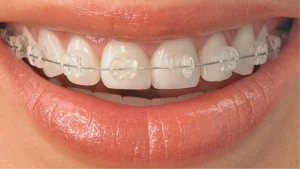
Ceramic braces work the same way as metal braces, but the brackets are made from clear or tooth-coloured ceramic, so they blend in with your teeth. They suit adults and teenagers who need fixed braces and would rather they were less noticeable. Every case starts with an assessment at our Woollahra or Mosman practice.
What are ceramic braces?
Ceramic braces use the same system as conventional braces. Brackets bonded to the front of each tooth hold an archwire that applies gentle, steady pressure, moving the teeth into position over time. The difference is the material: the brackets are clear or tooth-coloured ceramic rather than stainless steel.
You will also hear them called clear braces or tooth-coloured braces. They are not the same as clear aligners, which are removable plastic trays. Ceramic braces stay fixed until treatment ends.
The archwire is usually metal, so ceramic braces are less noticeable rather than invisible. If you want nothing on show, lingual braces sit behind the teeth.
Who are ceramic braces suitable for?
Ceramic braces treat most of the problems metal braces do, including crowding, gaps, rotated teeth, overbites, underbites and crossbites. They suit:
- adults who want fixed treatment that is less visible at work and in photos
- teenagers whose adult teeth have come through
- bite problems where fixed braces give more control than aligners
- people who would rather not depend on wearing aligners 20 to 22 hours a day
Ceramic is harder than enamel, so if your lower front teeth bite against the upper brackets, the teeth can wear. In that case ceramic may go on the upper teeth only, with metal on the lower teeth, which show less. Ceramic brackets are also slightly bulkier and more brittle than metal. For younger children, see braces for children and teenagers.
Ceramic braces vs metal braces vs clear aligners
| Feature | Metal braces | Ceramic braces | Clear aligners |

|---|---|---|---|
| How they look | Silver, clearly visible | Clear or tooth-coloured, far less noticeable | Near-clear trays; small attachments may show |
| Removable | No | No | Yes, for eating and cleaning |
| What keeps treatment on track | Fixed, works full time | Fixed, works full time | You, wearing trays 20 to 22 hours a day |
| Staining | Elastic ties can discolour | Elastic ties can discolour; brackets resist staining | Trays come out to eat and drink |
| Usual fee | Generally the lowest | Generally more than metal | Varies with the case |
Compare metal and Damon braces or clear aligners.
What happens during ceramic braces treatment?
Most courses of braces take 18 to 24 months. Simpler cases can finish sooner.
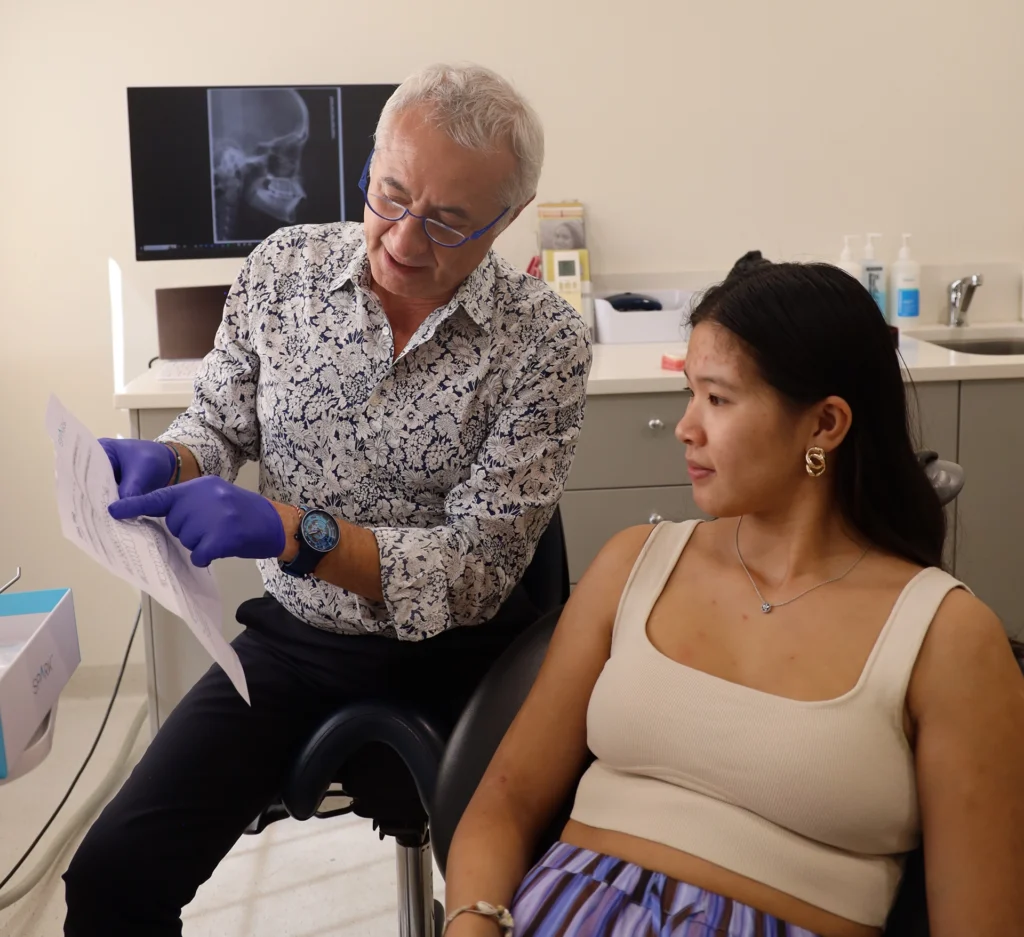
- Assessment. We examine your teeth and bite, take photographs and X-rays, and explain your options, timeframes and costs.
- Treatment plan. Your orthodontist maps the tooth movements and confirms whether ceramic suits your bite.
- Fitting. Brackets and wire go on in one longer appointment. Expect some tenderness for a few days.
- Adjustments. Roughly every four to eight weeks, to adjust the wire and replace the elastic ties.
- Removal and retainers. The brackets are removed carefully and retainers hold the result.
How much do ceramic braces cost in Sydney?
The fee depends on:
- how far your teeth need to move
- how long treatment takes
- whether one or both arches are treated
- the retainers you need
Ceramic braces usually cost more than metal because the brackets are more expensive to make.
You receive a written quote after your assessment, before you commit. If you have extras cover, ask your fund what it contributes to orthodontics, as policies differ. Our payment plans and finance page explains how to spread the cost.
Why choose Lifestyle Orthodontics for ceramic braces?
Lifestyle Orthodontics is a specialist orthodontic practice led by Professor Ali Darendeliler.
Dr Roshanak (Roshy) Boustan
An Australian orthodontic board and AHPRA registered specialist orthodontist.
We plan treatment from digital records.
135 Edgecliff Road, Woollahra
Suite 2, 600 Military Road, Mosman
Frequently asked questions
Do ceramic braces stain?
The ceramic brackets resist staining. The clear elastic ties that hold the wire can discolour, especially with coffee, tea, red wine, curry and turmeric, but they are replaced at every adjustment, so any staining is temporary. Rinsing with water after strongly coloured food or drink helps.
Are ceramic braces worth it?
If the look of your braces matters to you, often yes. Clinically they do the same job as metal braces. They cost more and need a little more care, and in return they are far less noticeable for the year or two you wear them.
Is 30 too late for braces?
No. Teeth can be moved at any age if the gums and supporting bone are healthy. Many adults choose ceramic braces to correct crowding that has crept in over the years, or teeth that moved after earlier treatment.
Do ceramic braces take longer than metal braces?
For most people the difference is small. Ceramic brackets create slightly more friction against the wire, which is allowed for in the plan. Treatment length depends far more on your case than on the bracket material.
Are ceramic braces the same as clear braces?
Yes. Clear braces, clear ceramic braces and tooth-coloured braces are the same appliance, unlike clear aligners, which are removable trays.
Book a ceramic braces assessment in Sydney
An assessment tells you whether ceramic braces suit your teeth and bite, how long it would take and the likely cost. No referral is needed. Call 02 8412 0085 or get in touch to book with an orthodontist in Sydney at Woollahra or Mosman.